Start a project
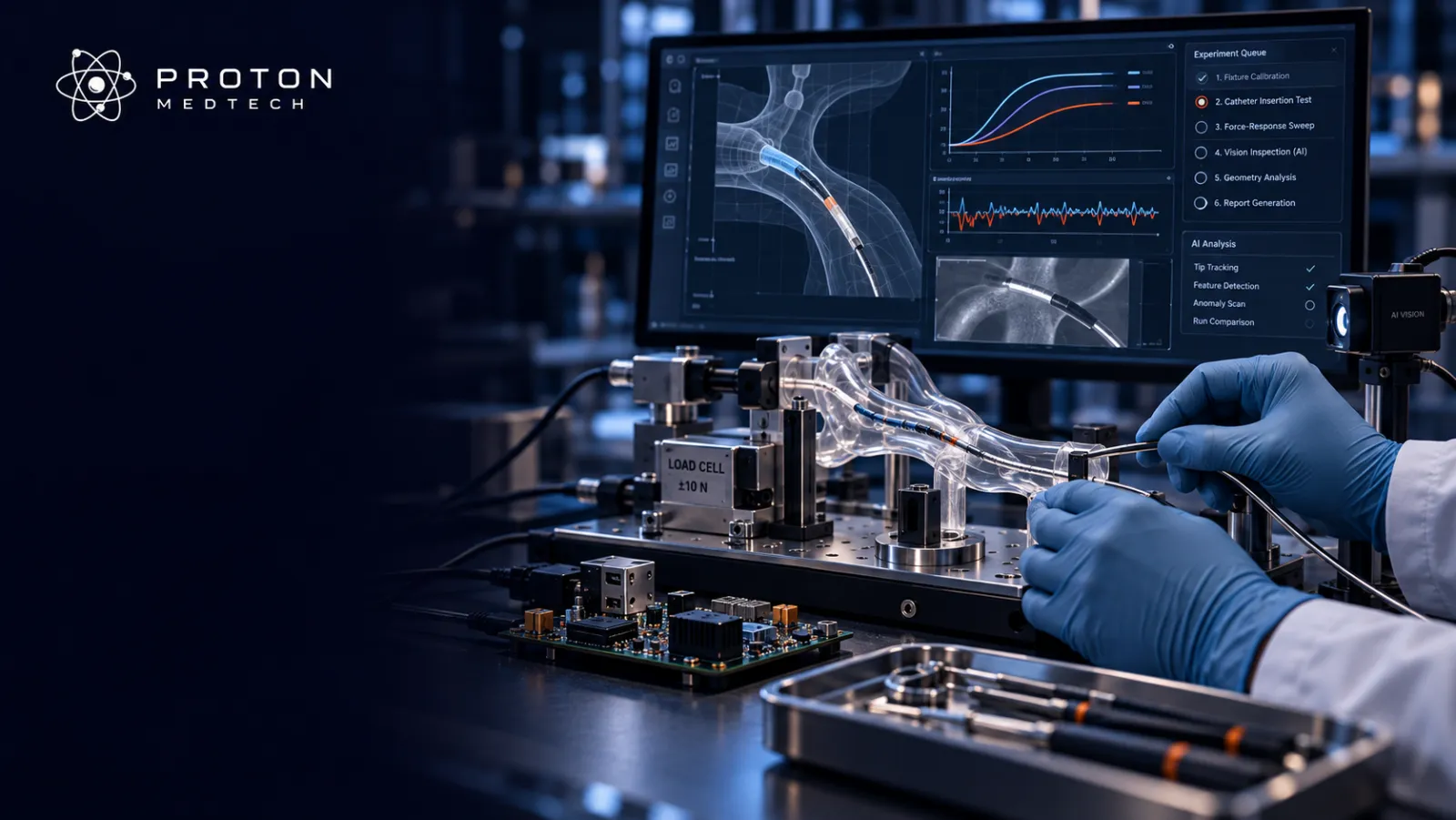
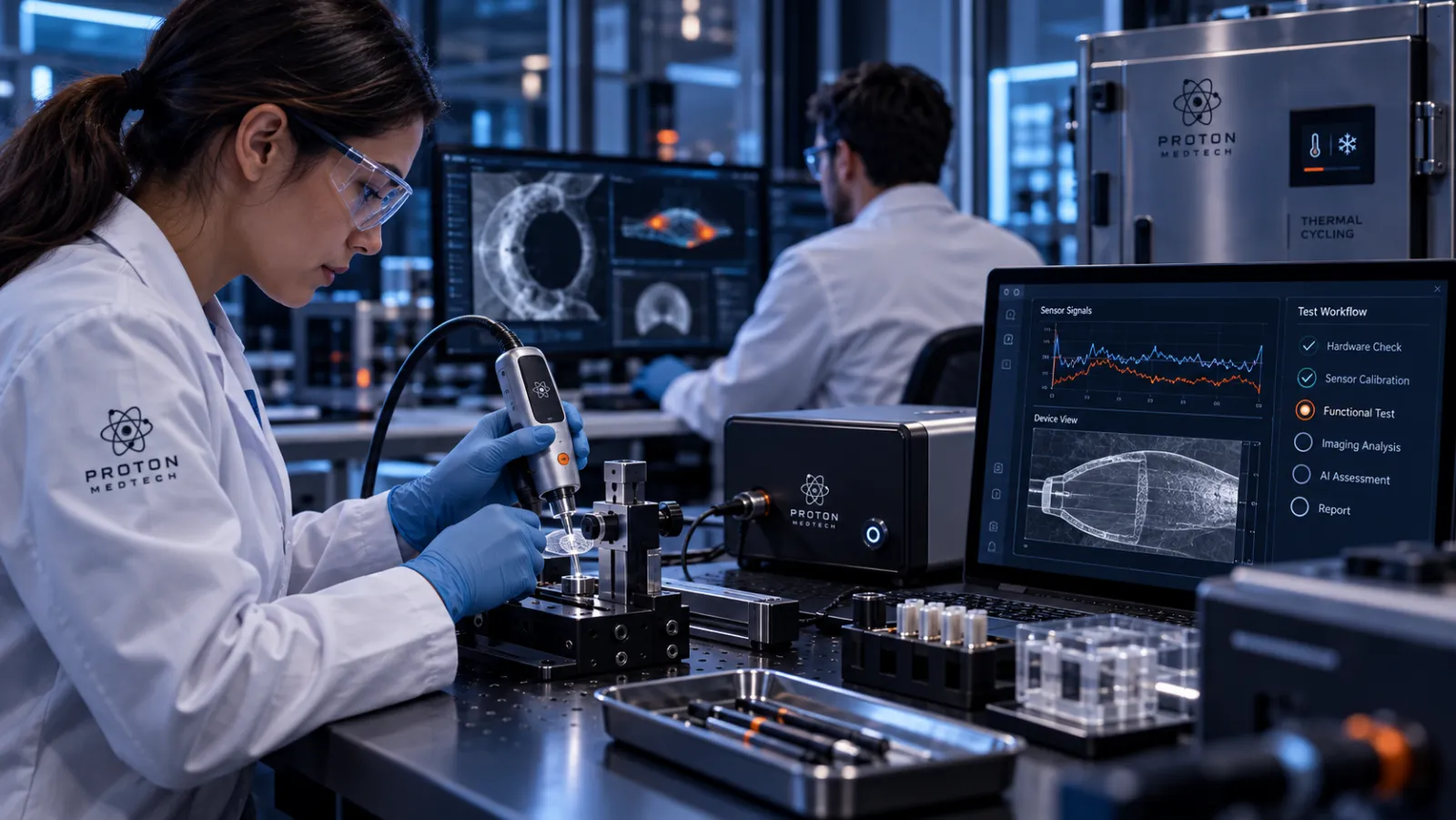
Proton engineer working on an instrumented catheter test fixture with connected analytical software
Super Intelligence · Intelligent medical technology

Engineered with superintelligence.
From device to decision.

Intelligent medical technology takes devices, software, data and tools working together. We turn clinical insight into systems that sense, interpret, recommend and carry out useful work.

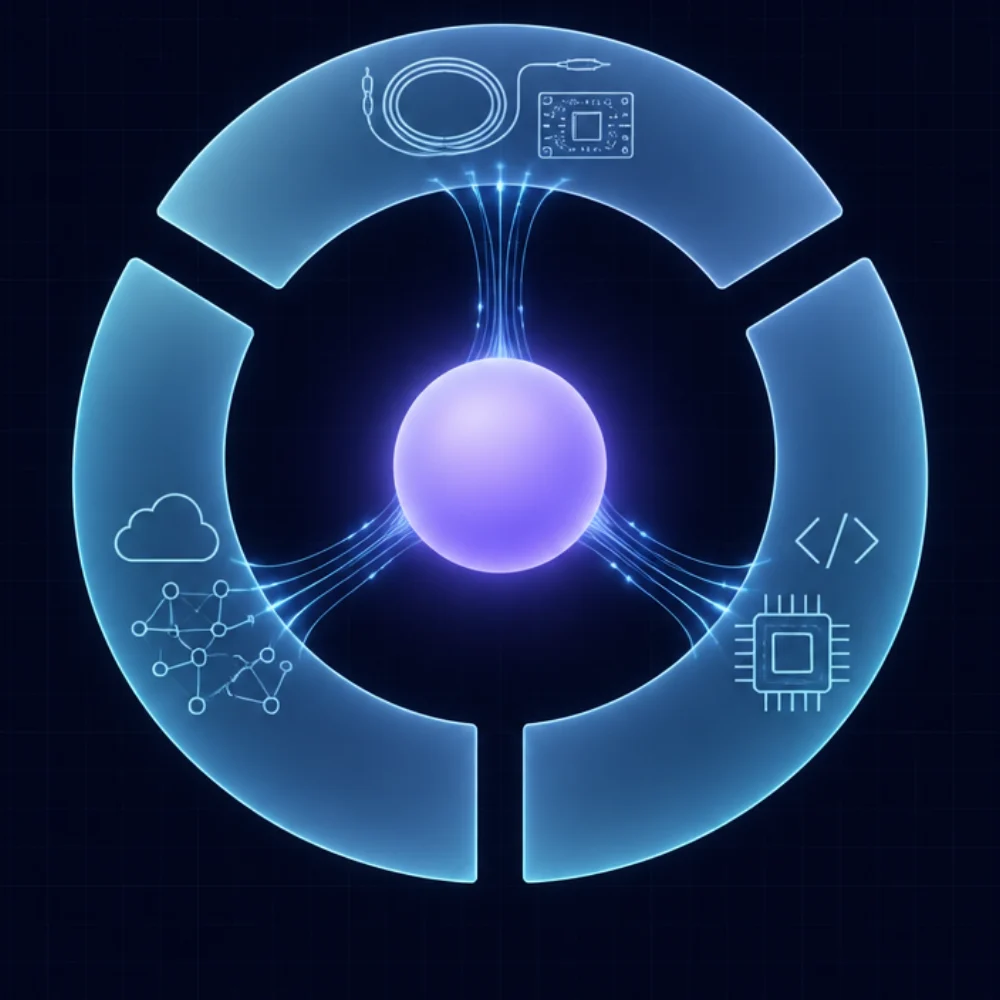
SensePhysical devices and live signals
SeeImages, video and visual context
RecommendPatient-specific decision support
ActConnected tools and useful workflows
What we build

The product and its intelligence, engineered together.

Six connected ways to turn a clinical idea into a working physical and digital system.

01 · Sense

Intelligent Devices & Sensing

Build physical products that turn real-world signals into useful intelligence.

  • Connected sensors and wearables
  • Embedded and edge AI
  • Device interfaces and signal interpretation
Explore an example

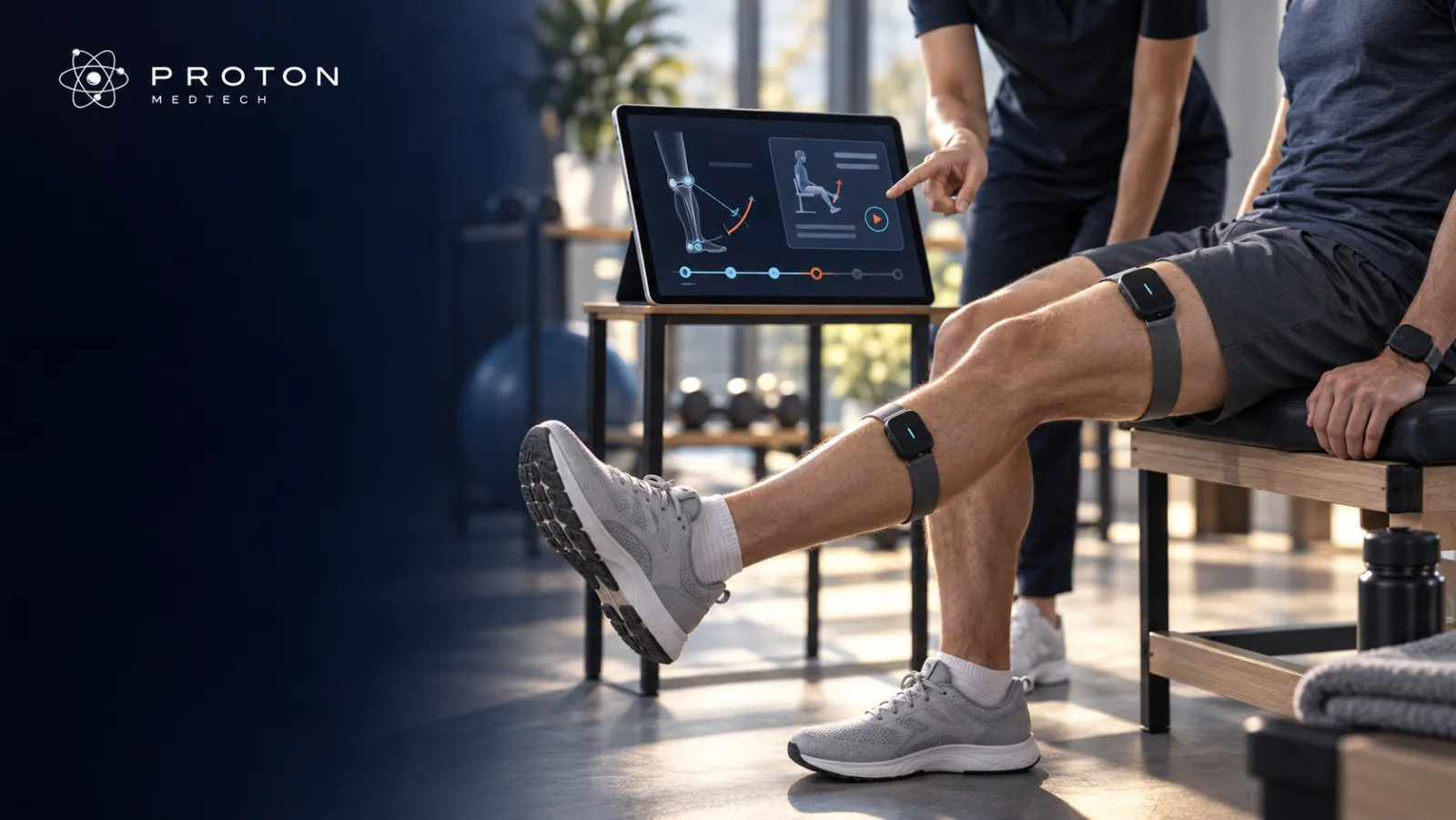
A wearable product combines sensing hardware, embedded signal interpretation and software that builds useful patient trends.
02 · See

Vision & Procedural Systems

Engineer imaging and visual systems that help people interpret what they see.

  • Medical image and video analysis
  • Capture-quality guidance
  • Procedural visualization and review
Explore an example

An ENT instrument brings image capture, quality guidance and structured visual review into one examination workflow.

03 · Recommend

Personalized Therapy & Control

Develop systems that use patient and device data to support individualized recommendations.

  • Therapy-setting decision support
  • Sensor-guided rehabilitation
  • Control-system research and development
Explore an example

A sensor-guided rehabilitation system prepares patient-specific exercise feedback for clinician review. Device-setting optimization can begin as a simulation-led research program.

04 · Connect

Connected Care Platforms

Unite devices, records, images, and patient history in software that builds context over time.

  • Remote-monitoring platforms
  • Multimodal patient timelines
  • Clinician review and decision-support tools
Explore an example

A connected-care application combines device signals, images, visit history and patient reports into a longitudinal review workspace.

05 · Act

Clinical Software & Automation

Build intelligent software that reasons over information and uses tools to move work forward.

  • Clinical workspace integrations
  • Documentation and review workflows
  • Tool-using agents and coordinated automation
Explore an example

A clinical agent retrieves authorized context, uses approved tools and prepares a structured result or next task for review.

06 · Build & test

Simulation & Digital Engineering

Create virtual environments for developing, testing, and refining intelligent products.

  • Device and physiological simulations
  • Virtual patient scenarios
  • Hardware-connected testing and AI evaluation
Explore an example

A hardware-connected test setup combines simulated use, machine-vision inspection and model evaluation before the next physical iteration.

Across specialties

A broader field of intelligent medicine.

From connected wearables and musculoskeletal systems to endoscopy, cardiac care and beyond. Choose a field to explore what we can build together.

Proton Wearables & Monitoring: connected medical hardware and intelligent clinical software
Wearables & Monitoring

Signals that build a picture over time.

Build a connected product around motion, temperature and other available sensor streams. Combine embedded processing with longitudinal patient context and a useful review experience for the care team.

Sensors & firmwareMultimodal AIConnected care
What connects

Available sensor streams, reported symptoms and patient history.

What it can enable

Patient-specific trends, review summaries and monitoring workflows.

Discuss an idea in this space →
Under the hood

The device, and the intelligence inside it.

Embedded AI, custom model training, firmware, software and companion apps, from the same team that builds the hardware.

On the device

Embedded AI

Models that run on the device itself, on low-power processors, for sensing, detection and closed-loop response.

Your data

Custom AI training

Models trained and validated on your device's own data: bench tests, pre-clinical studies and signal recordings.

Low level

Firmware

Firmware for pulse generators, sensors and powered implants, written alongside the boards it runs on.

Engineering tools

Custom software

Software for device programming, data capture, test automation and analysis.

For people

Custom apps

Companion apps for clinicians and patients, connected to your device and its data.

How we work

AI-assisted engineering

Our engineers and proprietary equipment work alongside AI tools, so every build cycle moves faster.

How we work

Build. Test. Learn.
The whole system.

The same hands-on engineering approach, with hardware, software and AI moving through the program together.

Proton engineers evaluating a complete connected medical device system
An integrated development program

Start with the clinical problem.

Define intended use, users, device constraints and available data. Decide where intelligence would make a useful difference and what the system must demonstrate.

Clinical needSystem architectureFeasibility criteria
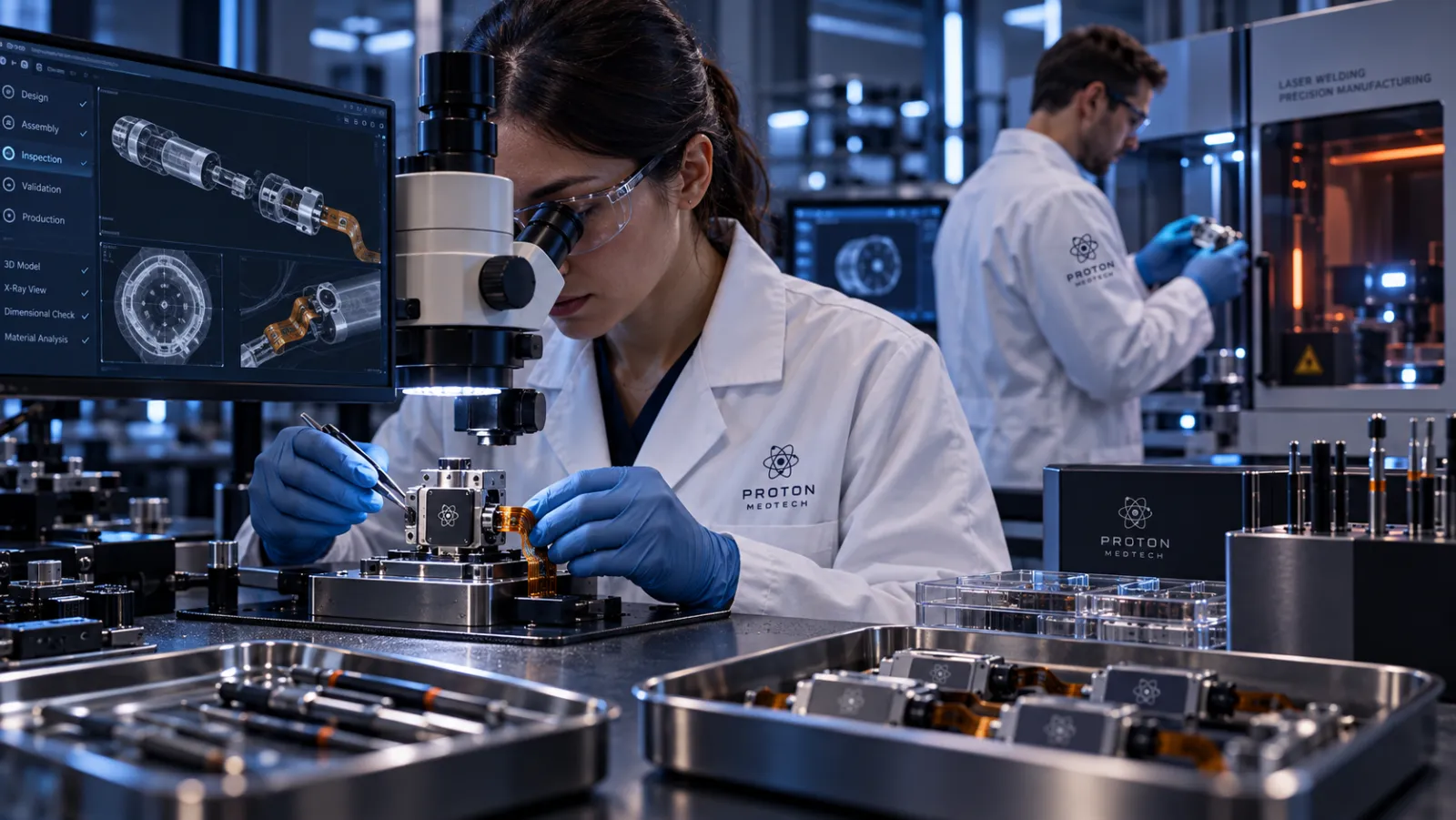
Proton engineers assembling and inspecting precision medical-device components
Proton engineering depth

Intelligence, backed by a team that builds.

Lead, catheter and electronics development. In-house prototyping. Bench and pre-clinical testing. Pilot manufacturing. The physical engineering stays at the center of the intelligent product.

  • Leads, catheters and implantable electronics
  • Hardware, firmware and connected software
  • Prototyping and custom test fixtures
  • Class VII cleanroom builds
Explore the full engineering capabilities →
Questions

AI + hardware projects, answered.

Can the AI run on the device itself?

That's often the goal: small models sized for low-power hardware, so the device can respond without a connection. When a task needs more computing, the work can be split between the device and a companion app.

Can you train a model on our data?

Yes. We train and validate custom models on your device's own data, from bench tests, pre-clinical studies and signal recordings. Your data stays yours.

Do you write the firmware and software too?

Yes. Hardware, firmware, software and companion apps are built by one team, alongside the leads, catheters and electronics we prototype here.

We already have hardware. Can you add AI to it?

Yes. We can start from your existing design, find where AI helps, and build the model, firmware and software around it.

Start a project

What should your next device
be capable of?

Bring your clinical problem, device idea or workflow. Let's shape the complete system around it.

Start an intelligent project